
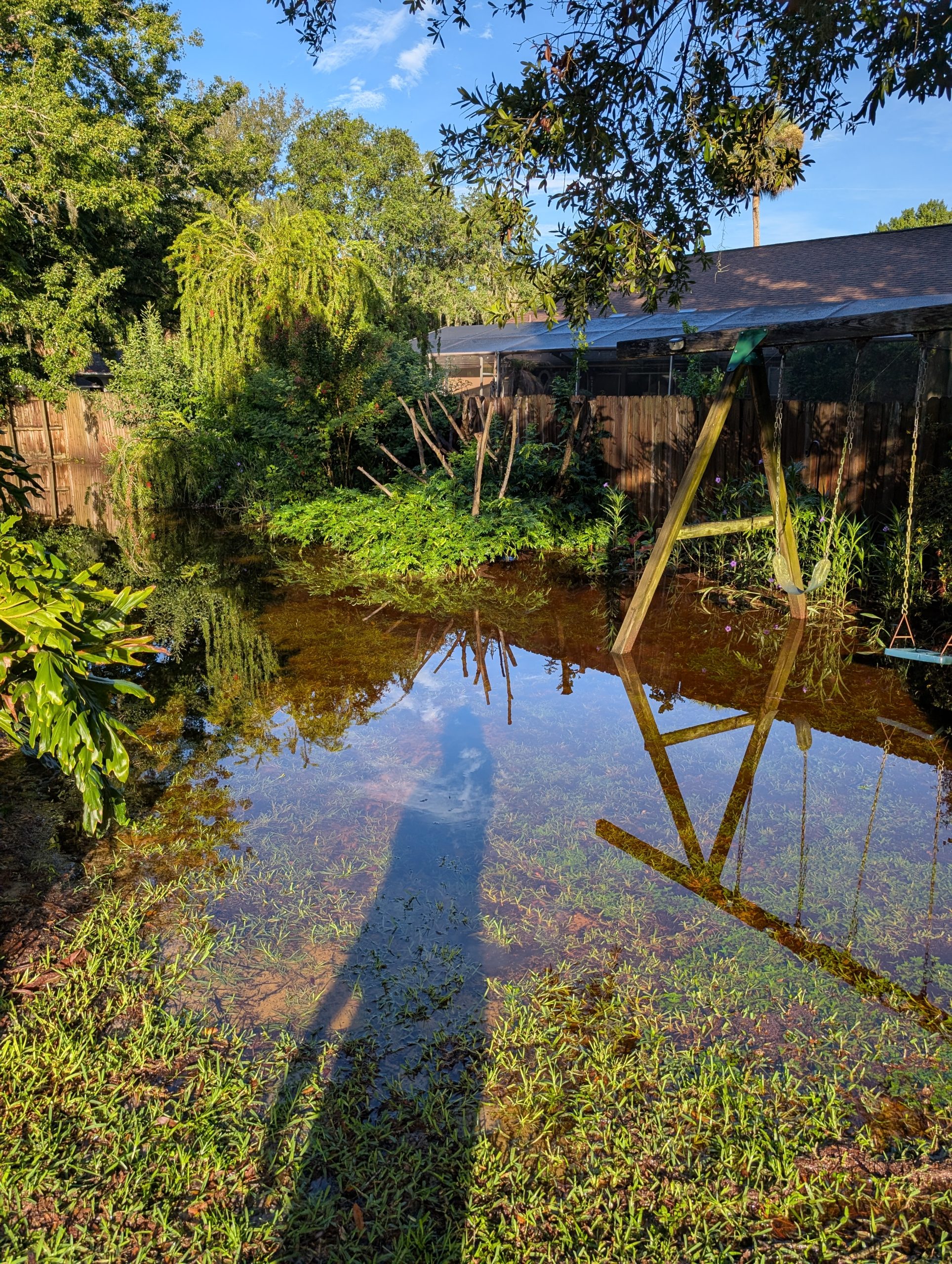
Storm water → runoff → downstream neighborhoods
Why it matters
Numerous neighbors in the vicinity of the Cross Seminole Trail and Jetta Point have been experiencing increased flooding of homes and properties, and we are concerned that changing the wetland and scrub landscape could increase runoff or further alter drainage toward nearby homes. We ask decision-makers to understand those connections before changing the use of Jetta Point and that this effort extend to all the areas adjacent to the Cross Seminole Trail.
Preliminary basin studies have been conducted by Seminole County, but we do not believe they reflect actual conditions on the ground. For instance, the Ardurra study suggests ripping out the trail to install new pipes and offloading runoff from a developed Jetta Point to the west of Vistawilla Drive, an area that already sees significant flooding.
In addition, there are concerns about the impact of the FL 417 expansion project that will increase storm water runoff by at least one-third. The Cross Seminole Trail should not be used as a creek bed on the water’s way to Howell Creek and Lake Jesup.
Questions that need answers before any changes occur…
- How does water move through the site during major storms?
- How do existing drainage structures and their condition affect nearby neighborhoods?
- How would proposed paving or grading change runoff, storage, and infiltration?
Click to read more
The team has called for closer review of watershed modeling, swales, culverts, maintenance, impacts on wetlands, and downstream effects. Residents’ dated flood photographs and firsthand accounts can help identify questions for engineers.
Of course, these are complex engineering issues. These are community concerns and requests for technical review. The site does not quantify flood impacts or promise that preservation alone prevents all flooding.
However, we note that in this immediate area, in addition to the Fl 417 expansion, buildings along SR 434 between Vistawilla and FL 417 have been built without any additional retention ponds being built. Some commissioners blame neighborhood flooding on individual homeowners putting in pools or sidewalks, but studies show that commercial and roadway development contribute much more to flooding, and new projects are often built up high on fill dirt, which directs the water into existing homes and businesses.
One study released in 2026 by the Massachusetts Institute of Technology estimates that Florida homeowners have lost $1.6 billion due to changes in land mitigation laws at the state level in recent years, which allow developers to ignore local watershed needs.